
Eine Madgicx-Alternative für Teams, die den Launch-Workflow in den Griff bekommen müssen
Madgicx hilft, Meta-Kampagnen zu optimieren, sobald sie live sind. Kitchn ist für die operative Arbeit davor gebaut: Hunderte oder Tausende Anzeigen über Konten und Kanäle vorbereiten, prüfen und launchen, ohne jede Anzeige einzeln anzulegen.
Anzeigen in hohem Volumen über Konten und Kanäle vorbereiten, prüfen und launchen.
Meta-Kampagnen optimieren, automatisieren und auswerten, die schon live sind.
Wenn die Optimierung laufender Meta-Kampagnen dein Engpass ist, passt Madgicx wahrscheinlich besser.
Wenn dein Team seine Zeit beim Erstellen und Launchen von Anzeigen im großen Stil verliert, genau dort passt Kitchn.
Kitchn vs Madgicx: die kurze Antwort
| Wenn du Folgendes brauchst … | Passt besser | Warum |
|---|---|---|
| Große Anzeigen-Batches erstellen und launchen | Kitchn | Launch Sheet im Tabellenformat, gebaut für Umsetzung mit hohem Volumen |
| Auf mehreren Paid-Social-Kanälen launchen | Kitchn | Acht unterstützte Launch-Kanäle, davon fünf allgemein verfügbar |
| Text- und Setup-Probleme vor dem Launch finden | Kitchn | Die Validierung läuft, bevor eine Anzeige erstellt wird |
| Launches mit Teams oder Kunden prüfen | Kitchn | Status, Kommentare und teilbare Vorschauen pro Zeile |
| Wiederholbare Launch-Standards anwenden | Kitchn | Sheet-Defaults, Ad Templates und Namenstemplates |
| Laufende Meta-Kampagnen mit KI-Empfehlungen optimieren | Madgicx | Das ist ein Kernbestandteil von AI Marketer |
| KI-gestützte Meta-Zielgruppen finden und ausspielen | Madgicx | Audience Launcher ist gezielt für Targeting-Workflows gebaut |
| Fortgeschrittene Automatisierung zur Optimierung laufender Meta-Kampagnen | Madgicx | Madgicx ist im Kern ein Optimierungsprodukt |
| Kundenreports als PDF exportieren | Madgicx | One-Click Report unterstützt PDF-Export |
| Sowohl Launch-Operations als auch laufende Optimierung lösen | Beide | Sie können an verschiedenen Stellen desselben Workflows sitzen |
Die eigentliche Frage ist nicht einfach „Welches Tool hat mehr Features?“
Sondern wo deine Paid-Social-Operation hängen bleibt.
Madgicx optimiert die Anzeigen. Kitchn bringt die Anzeigen live.
Das ist der größte Unterschied zwischen den beiden Produkten.
Madgicx
Madgicx ist vor allem um die Optimierung von Meta-Werbung herum gebaut.
Sein AI Marketer prüft Meta-Werbekonten und empfiehlt Maßnahmen. Seine Automatisierungstools überwachen die Performance und handeln rund um laufende Kampagnen. Audience Launcher hilft Teams, Targeting-Strategien aufzubauen und auszuspielen.
Dazu gibt es einen Ad Launcher, um Meta-Anzeigen zu erstellen und zu kombinieren.
Kitchn
Kitchn setzt früher im Workflow an.
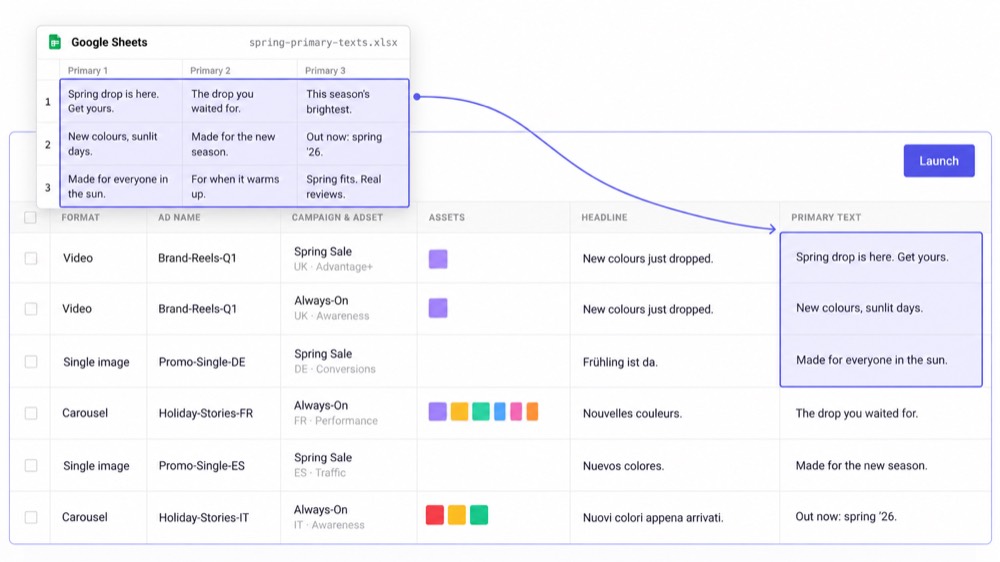
Im Launch Sheet bereiten Paid-Social-Teams große Anzeigen-Batches vor, bevor sie live gehen. Eine Zeile ist eine Anzeige. Creative, Texte, Ziel-URL sowie Kampagnen- und Anzeigengruppen-Infos stehen in Spalten.
Teams importieren Assets in Bulk, bearbeiten ganze Auswahlen, prüfen die Zeilen und launchen den Batch.
Wenn deine Media Buyer jede Woche Stunden damit verbringen, Creatives in die Werbekonten zu bringen, ist dieser Unterschied entscheidend.
Kitchn.io vs Madgicx im Funktionsvergleich
| Funktion | Kitchn.io | Madgicx |
|---|---|---|
| Hauptaufgabe | Launch-Operations mit hohem Volumen | Meta-Optimierung und Automatisierung |
| Bulk-Erstellung von Anzeigen | ✓Launch Sheet, gebaut für Anzeigen-Batches | ✓Ad Launcher erstellt und kombiniert Meta-Anzeigen |
| Launch in bestehende Meta-Anzeigengruppen | ✓Unterstützt | ✓Unterstützt |
| Workflow für neue Anzeigengruppen | Kann auf unterstützten Kanälen eine bestehende Anzeigengruppen-Struktur duplizieren | Eigener Workflow im Audience Launcher |
| Launchen auf mehreren Kanälen | ✓8 Launch-Kanäle, davon 3 derzeit in Beta | Vor allem Launchen auf Meta |
| Validierung vor dem Launch | ✓Läuft, bevor die Anzeige erstellt wird | ✕Kein vergleichbarer Workflow dokumentiert |
| Freigabestatus | ✓Konfigurierbare Status pro Zeile | ✕Kein vergleichbarer Launch-Review-Workflow dokumentiert |
| Kommentare an Launch-Zeilen | ✓Pro Zeile | ✕Kein vergleichbarer Workflow für Launch-Zeilen dokumentiert |
| Teilbare Anzeigenvorschauen | ✓Links mit Lesezugriff | ✕Nicht als Teil von Ad Launcher dokumentiert |
| Freigabe blockiert den Launch | ✕Der Status ist sichtbar, sperrt den Launch aber nicht | Nicht dokumentiert |
| Namenstemplates | ✓Pro Sheet und Plattform angewendet | Asset-Benennung und Namensstempel, nicht derselbe Launch-Template-Workflow |
| Benennung beim Launch erzwungen | ✕Nicht erzwungen | Nicht dokumentiert |
| Sheet-Defaults | ✓Einmal pro Sheet festgelegt | ✕Kein Gegenstück zum Launch Sheet |
| Wiederverwendbare Ad Templates | ✓Auf Organisationsebene, pro Plattform | Gespeicherte Ad Cluster verfügbar |
| Änderungshistorie pro Zeile | ✓Mit Vorher und Nachher | ✕Keine vergleichbare Launch-Historie pro Zeile dokumentiert |
| KI-Empfehlungen zur Optimierung | ✕Nicht angeboten | ✓Ja |
| KI-Erstellung und -Suche von Zielgruppen | ✕Nicht angeboten | ✓Ja |
| Regeln für laufende Automatisierung | ✓Meta und TikTok, schmaler als bei Madgicx | ✓Eine Kernstärke |
| Creative Reporting | ✓Meta, TikTok, Google Ads und Pinterest | ✓Breiteres Reporting- und Dashboard-Produkt |
| Öffentliche Report-Links | ✓Ja | ✓Ja |
| PDF-Export von Reports | ✕Nicht verfügbar | ✓Ja |
| White-Label-Branding für Reports | ✕Nicht verfügbar | ✕Derzeit nicht verfügbar |
| Preis direkt an den Ad Spend gekoppelt | ✕Nutzerplätze und Uploads, nicht Spend | Der Preis von Pro Complete richtet sich nach dem monatlichen Ad Spend |
Wo Kitchn stärker ist
Launch-Operations mit hohem Volumen
Je mehr Creatives dein Team produziert, desto schmerzhafter wird die Umsetzung Anzeige für Anzeige. Bei Hunderten oder Tausenden Anzeigen im Monat ist das Hochladen keine kleine Aufgabe des Media Buyers mehr, sondern wird zu einer eigenen Funktion im Betrieb.
Kitchn ist um genau dieses Problem gebaut.
- Texte aus einem Spreadsheet einfügen.
- Assets in Bulk importieren.
- Die Zeilen in Bulk bearbeiten.
- Den Batch prüfen.
- Launchen und mit dem nächsten weitermachen, während der Launch läuft.
Für ein Team mit echtem Volumen unterscheidet sich dieser Workflow deutlich davon, eine Funktion zum Anlegen von Anzeigen in einer Optimierungsplattform zu nutzen.
Strukturelle QA passiert, bevor die Anzeige erstellt wird
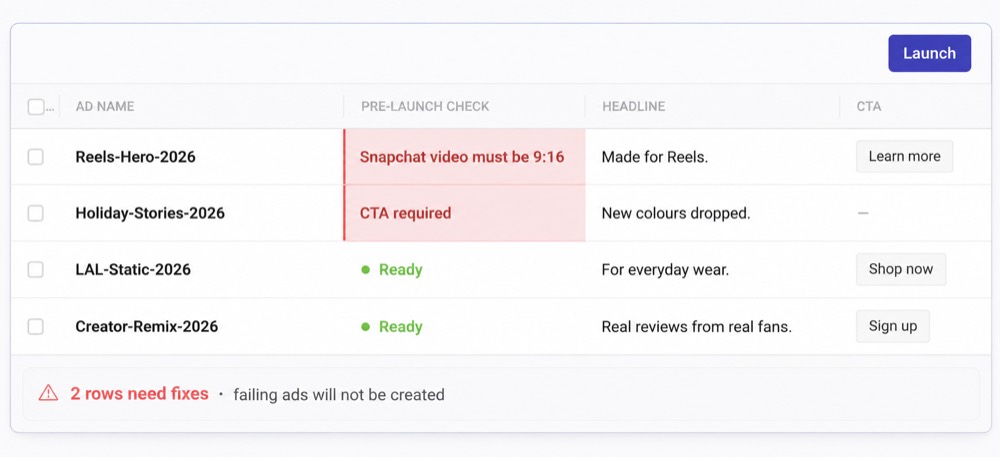
Kitchn validiert vor dem Launch. Geprüft werden zum Beispiel:
- Pflichtfelder
- Regeln zu Schema, Länge und Muster
- URL-Formatierung
- Formatierung der URL-Parameter
- Plattformspezifische Specs
- Einstellungen für Metas Creative Enhancements
Eine Zeile, die die Validierung nicht besteht, geht in einen Fehlerstatus, und die Anzeige wird nicht erstellt.
Und geprüft wird nicht nur das Setup. Kitchn liest auch die Texte, also wird ein Tippfehler oder eine Formulierung, die der Kunde ausgeschlossen hat, im selben Durchgang gefunden. Was auch immer auffällt, der Batch wartet, bis jemand es behebt.
Den Launch prüfen, ohne so zu tun, als wäre die Freigabe eine harte Sperre
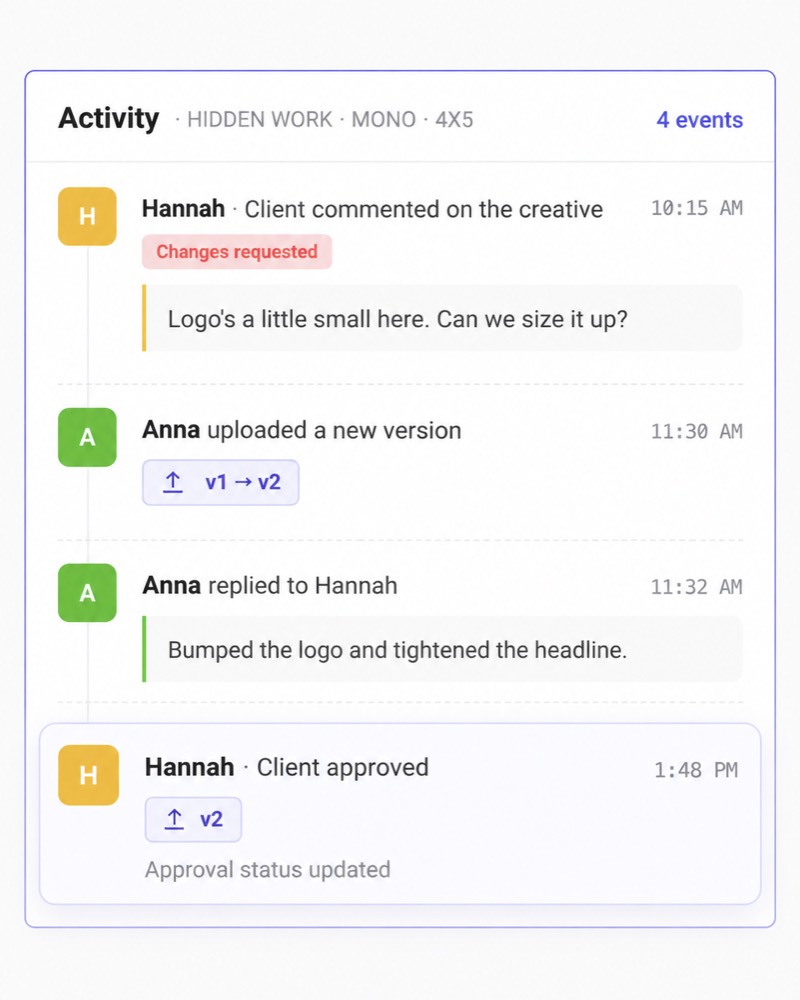
Kitchn gibt Teams pro Zeile:
- Freigabestatus
- Kommentare
- Anzeigenvorschauen
- Freigabe-Links mit Lesezugriff
So können Media Buyer, Teamleads, Creative-Teams oder Kunden den eigentlichen Launch prüfen, statt alles über ein weiteres Spreadsheet und einen Slack-Thread abzustimmen.
Der Freigabestatus sperrt den Launch-Button aber nicht technisch. Er gibt dem Team einen sichtbaren Review-Workflow. Die Person, die launcht, verantwortet weiterhin die finale Aktion.
Für professionelle Paid-Social-Teams ist dieser Unterschied nützlicher, als so zu tun, als könne Software die operative Verantwortung ersetzen.
Standards, ohne so zu tun, als würde die Software alles überwachen
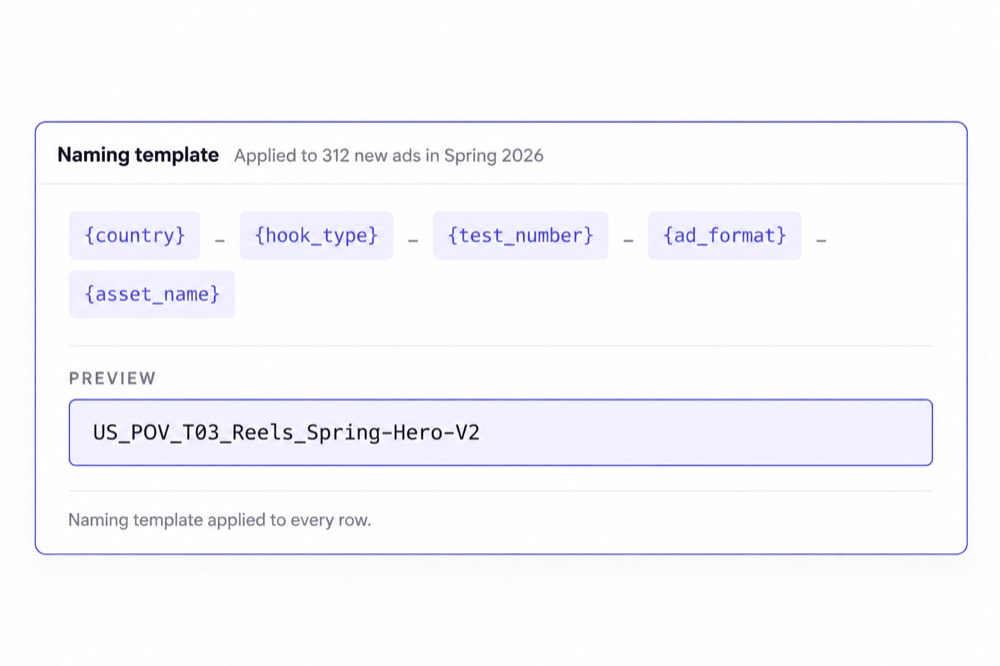
Kitchn kann Namenstemplates pro Sheet und Plattform anwenden, zusammen mit wiederverwendbaren Ad Templates und Defaults auf Sheet-Ebene. So bekommen Heads of Paid Social und Operations einen wiederholbareren Ausgangspunkt über alle Konten.
Namenskonventionen werden aber angewendet, nicht beim Launch erzwungen. Kitchn lehnt keine Anzeige ab, nur weil jemand den Namen von Hand geändert hat.
Der praktische Gewinn ist einfacher: Deine Media Buyer müssen nicht jedes Mal dasselbe Setup neu bauen, und die Operation wird einheitlicher, während das Volumen wächst.
Auf mehr als nur Meta launchen
Kitchn unterstützt derzeit acht Launch-Kanäle.
| Meta (Facebook & Instagram) | Allgemein verfügbar |
| TikTok | Allgemein verfügbar |
| Google Ads (Demand Gen) | Allgemein verfügbar |
| Allgemein verfügbar | |
| Snapchat | Allgemein verfügbar |
| Beta | |
| Spotify | Beta |
| AppLovin | Beta |
Google-Demand-Gen-Anzeigen werden in bestehende Anzeigengruppen gelauncht und starten pausiert. Kitchn baut keine Google-Ads-Kampagnen von Grund auf.
X lässt sich mit Kitchn verbinden, aber das Launchen auf X ist derzeit nicht verfügbar.
Der Workflow zum Launchen von Anzeigen bei Madgicx konzentriert sich auf Meta. Wenn dein Paid-Social-Team auf mehreren Kanälen arbeitet, wird dieser Unterschied wichtiger, je größer der Kundenstamm wird.
Wo Madgicx stärker ist
Madgicx ist das bessere Produkt, wenn das Problem, das du lösen willst, die Optimierung nach dem Launch ist.
KI-gestützte Meta-Optimierung
AI Marketer prüft Meta-Konten und gibt Empfehlungen, die auf eine bessere Performance laufender Kampagnen ausgelegt sind.
Kitchn hat keinen vergleichbaren autonomen KI-Media-Buyer.
Zielgruppensuche und Targeting
Der Audience Launcher von Madgicx ist darauf ausgelegt, Meta-Zielgruppen zu finden, zu erstellen und auszuspielen.
Kitchn erzeugt keine Zielgruppen und empfiehlt keine Targeting-Strategien.
Automatisierung laufender Kampagnen
Beide Produkte haben Regeln, aber sie sollten nicht als gleichwertig dargestellt werden. Die Rule Engine von Kitchn übernimmt operative Aktionen auf Meta und TikTok, darunter Pausieren, Umbenennen und Benachrichtigungen, und einige weitere Aktionen gibt es auf Anfrage.
Die Automatisierung zur Optimierung laufender Meta-Kampagnen steht bei Madgicx viel stärker im Zentrum des Produkts.
Reporting über die Creative-Analyse hinaus
Madgicx One-Click Report kann Daten aus Quellen wie Meta Ads, Google Ads, Google Analytics 4, TikTok, Shopify und Klaviyo zusammenführen. Dazu gibt es einen PDF-Export.
Kitchn Creative Reporting ist gezielter darauf ausgelegt, das Creative selbst über Meta, TikTok, Google Ads und Pinterest zu analysieren. Kitchn hat derzeit keinen PDF-Export, keinen geplanten Versand per E-Mail, kein White-Label-Branding für Reports und keine Währungsumrechnung. Wenn du das brauchst, tu nicht so, als wäre es anders.
Welches passt zu deinem Team?
Wähle Kitchn, wenn …
- dein Team Hunderte oder Tausende Anzeigen launcht
- Media Buyer zu viel Zeit mit dem Erstellen und Hochladen von Anzeigen verbringen
- du auf mehreren Paid-Social-Kanälen arbeitest
- mehrere Leute an einem Launch beteiligt sind
- du strukturelle Checks brauchst, bevor Anzeigen erstellt werden
- Sheet-Defaults, Templates und Namenskonventionen deine Launches wiederholbarer machen sollen
- Heads of Paid Social besser sehen müssen, wie die Umsetzung mit hohem Volumen läuft
- du mehr Konto- oder Creative-Kapazität willst, ohne dass die manuelle Upload-Arbeit im gleichen Maß wächst
Wähle Madgicx, wenn …
- Meta das Zentrum deiner Paid-Media-Operation ist
- die Optimierung von Kampagnen nach dem Launch der größere Engpass ist
- du KI-generierte Optimierungsempfehlungen willst
- dir Zielgruppensuche und Targeting-Automatisierung wichtig sind
- du tiefere, auf Meta fokussierte Optimierungstools willst
- PDF-Reports für dein Kunden-Reporting wichtig sind
Nutze beide, wenn …
deine Operation beide Probleme hat.
Kitchn übernimmt den strukturierten Workflow, um große Mengen an Anzeigen live zu bringen. Madgicx bleibt auf die Optimierung fokussiert, sobald diese Meta-Anzeigen laufen.
Sie müssen sich nicht gegenseitig ersetzen, nur weil sie sich bei ein paar Features überschneiden.
Gebaut für Teams, bei denen das Launch-Volumen zum operativen Problem geworden ist
Kitchn ist am sinnvollsten, wenn Paid Social an einem Punkt angekommen ist, an dem die manuelle Umsetzung die Kapazität begrenzt. Teams, die Kitchn nutzen, arbeiten schon mit diesem Volumen.



Das gemeinsame Problem ist kein Mangel an Optimierungssoftware. Es ist, dass mehr Creatives, mehr Konten und mehr Tests mehr operative Arbeit erzeugen.
Kitchn ist dafür gebaut, dass diese Arbeit nicht im gleichen Maß mitwächst.
Du brauchst wahrscheinlich keinen „Madgicx-Ersatz“
Du musst den Engpass finden.
Wenn deine Meta-Kampagnen live sind und dein Team Software braucht, die entscheidet, was als Nächstes optimiert wird, bleib bei Madgicx.
Wenn deine besten Media Buyer immer noch Stunden mit Kopieren, Hochladen, Prüfen und Neubauen großer Anzeigen-Batches verbringen, schau dir Kitchn an.
Und wenn beides zutrifft,
nutze beide für die Aufgaben, in denen sie wirklich gut sind.
So passt Kitchn zu deinem Workflow
Geh mit uns die Workflows deines Teams durch.
So funktioniert Kitchn →